I have just read about Coca Cola’s recent Twitter fail at the Super Bowl (and campaign website fail also). A question comes to mind: could the brand have anticipated *and* avoided the issues experienced as it quickly reached its (increased) tweet publishing limit on the social network?

In my view, yes. On two grounds.

First, given the sheer size of the audience targeted on the day of the event, I feel it was ill-advised to use Twitter as a communication tool to thank *individual* users who were voting in its game. The risk of reaching the allowed hourly and daily limits was very real. An eventuality that became all the more real when voters on D Day were redirected to vote via Twitter… when the campaign site crashed under the heavy traffic.

What was the size of the audience I hear you ask?

Enormous. On the day of the incident only, as the ad aired at the start of the game, over 108 million Super Bowl TV viewers (vs 100 million estimated) tuned in and were able to vote for their favourite team through the campaign site and the brand’s social media channels.
Add to this the fans of the brand as content was seeded across all its social channels leading up to the game and during the game to get the voting and engagement going: nearly 60 millions Facebook fans, 0.5M+ Twitter followers plus YouTube viewers on top and without counting Tumblr and Instagram.

Not surprisingly, the levels of participation were no less impressive:

On its website, Coca Cola boasts “over 11 million fan engagements” and continues on with “Over one million fans visited CokeChase.com to vote for the characters they liked best. More impressively, those visitors stayed on the site, each participating in an average of eight “sabotages” against opposing factions. While the company anticipated fewer than one million total sabotages, nearly 7.3 million were performed”.

So, did Coca Cola simply become a victim of its own success having underestimated user engagement levels?

Yes but not just.

Regardless of audience sizes, I don’t feel it was necessary to thank voters participating via Twitter. In fact, it would have been ok not to thank them on Twitter in my opinion.

As a frequent user of social media networks, Twitter doesn’t strike me as being the right forum to do this i.e. I would expect a brand to thank me personally for my participation on Facebook but not on Twitter, where this kind of 1:1 interactions are pretty scarce in my own experience.
I feel Twitter is used at its best mainly as a source of up-to-the minute news bites – and when I retweet any of the tweets I receive from the brands, bloggers, etc I follow, I don’t expect them to thank me in return. I guess that’s how I have been conditioned.

As for Twitter’s response and policy on campaigns of that scale – I was relieved to read that Twitter expects advertisers to know better: “For Twitter, the issue boils down to protecting user experience and making sure that people and brands are tweeting in a judicious way”.
Judicious = sensible and Coca Cola was nothing but sensible on this one occasion.

I was equally pleased to find out that it is not Twitter’s intention to create special accounts with super high daily publishing limits. This would equal to a form of spamming in my world and as a Twitter fan, I would be devastated if it ever were to turn into Facebook any time soon, where the level of “advertising spam” is driving away users.

Finally, this one marketing glitch on Coca Cola’s part doesn’t take away the brilliance they have otherwise demonstrated in the planning and execution of their Mirage campaign – this truly was a marketing coup on many grounds and a fine example of how Social TV works – more on this later!

For now, check out the ad that kicked off this one-of-a-kind TV-and-social-media game if you haven’t seen it yet:
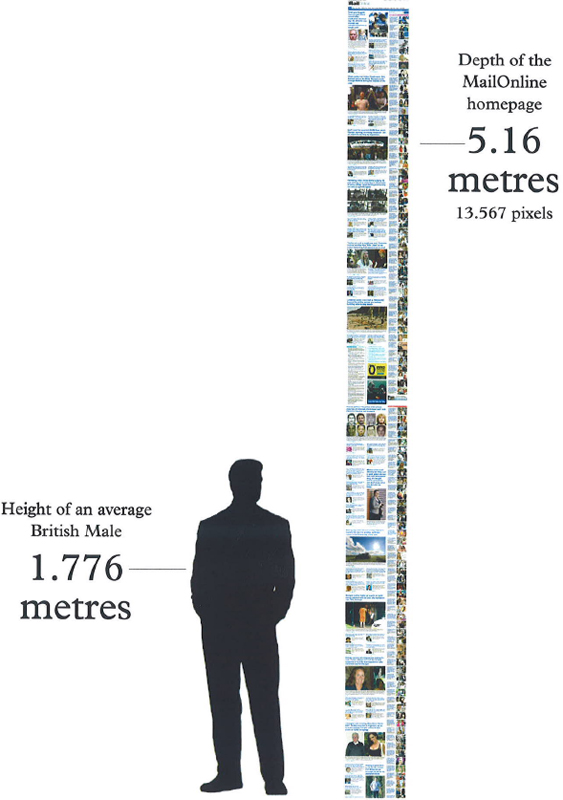

Following its redesign, the Daily Mail’s website becomes *the world’s* most popular online newspaper website! Pipping the New York Times to the post.

A success story that was awarded the DBA Design Effectiveness Grand Prix this month. I have included below some of the impressive results recorded to date (source: WARC):

– Unique browsers increased more than fivefold, from 18.7m to 91.6m a month (May 2012, ABCe)
– Average dwell time up from 3 minutes to over 6 minutes in 2011 (ABCe)
– Monthly revenue grown by 180% from October 2009 to March 2012 (MailOnline accounts)

The site is a fine example of “design-driven online innovation” as it leverages Web 2.0 features and maximises user engagement. I particularly like its 5.16m deep (!) homepage and other original disruptive features such as its heavy use of images and long clickable story headlines on its homepage (very ‘newspaper-unlike’). Have a browse and see for yourself.

Given its effectiveness, all newspapers out there in the process of transitioning to a digital-focused business model would do well to follow this site user-centered design approach. It will most likely help turn their companies’ fortunes around as they tap into a new kind of readership: young, connected and highly mobile.

Wmailonline2

I have just come across 2 recent studies on how social commerce is trending and impacting on sales in the US & Europe (the most insightful of which I am sharing with you here).

2 of their key findings which stuck out for me are:

#1 – 90% of the conversations about brands are still happening offline vs a meagre 10% online (source: InTV how to harness the power of conversations).

In other words, offline WOM still prevails by far and this behaviour is unlikely to change anytime soon with face-to-face chats with spouses, relatives and friends remaining the #1 influencers on purchase decisions, not the social banter.

And –

#2 – Social media very seldomly directly leads to an online sale (ref. low conversion rates/direct referrals).

This is not to say however that social media hasn’t got a role to play – it may well trigger a conversation in the offline world with your loved and trusted ones, ultimately leading to a sale. So still worth investing into in order to influence/guide those offline conversations.

The problem for advertisers then becomes how to measure the true impact/ROI of social conversations on their sales – if at all possible. Any ideas, anyone?

I have just read about Qantas latest promo event in the heart of Sydney CBD.

I happened to be walking past Customs House that day and picked up one of the leaflets handed out at the tent where the sand sculptures (v.beautiful BTW) were exhibited.

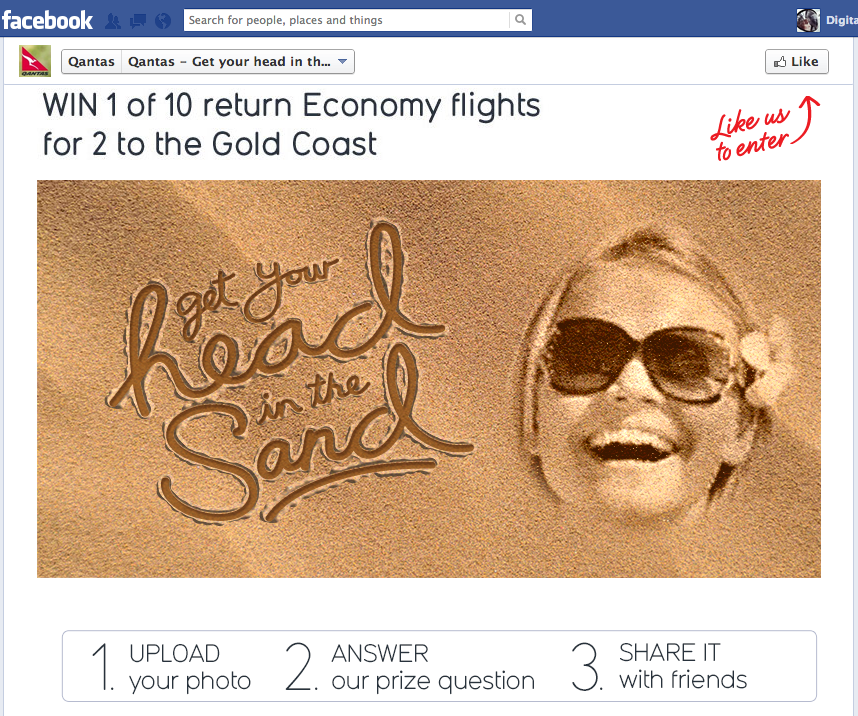
The promo includes a Facebook competition which you can enter only if you are a fan of the brand.

Check out the lealfet below:

photo (3)

The first thing that’s requested of you to be able to enter the competition is to like their Facebook page.

In other words: Give me your like (and with it the opportunity to broadcast 24/7 to your newsfeed) and I will give you the remote possibility of winning something.

This one line made me want to unlike that Facebook page instantly. Yet this has become common practice amongst advertisers.

To make it worse, the next step requires you to grant permission to an app that will post 24/7 to your timeline. So both timeline and newsfeed are now taken over (slightly intrusive to put it mildly).

In my view, the act of giving a like to a brand should be a genuine act of advocacy for it to generate *enduring* value for the brand (be it awareness, WOM, sales etc) – not obtained via some form of disguised blackmail.

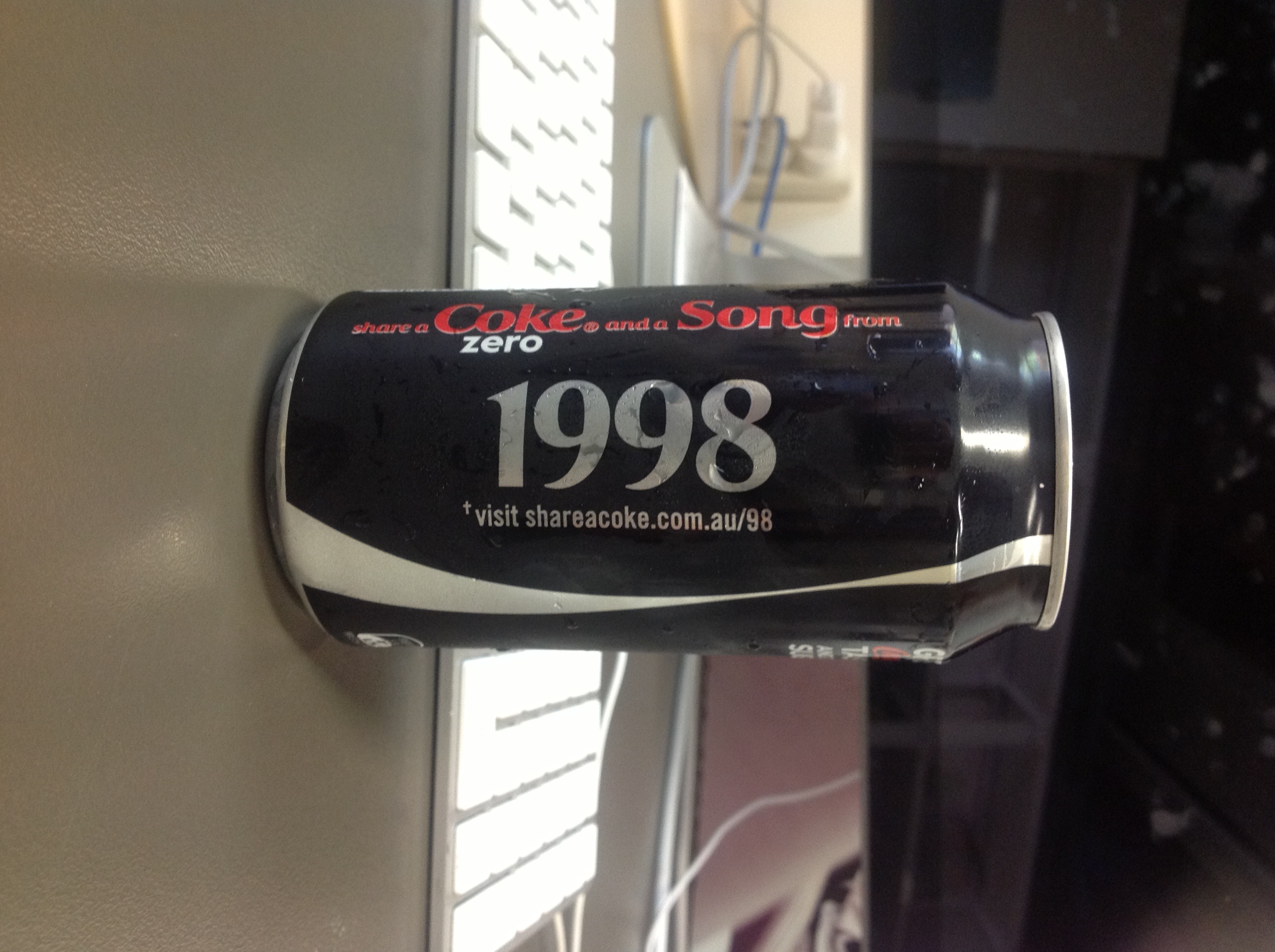
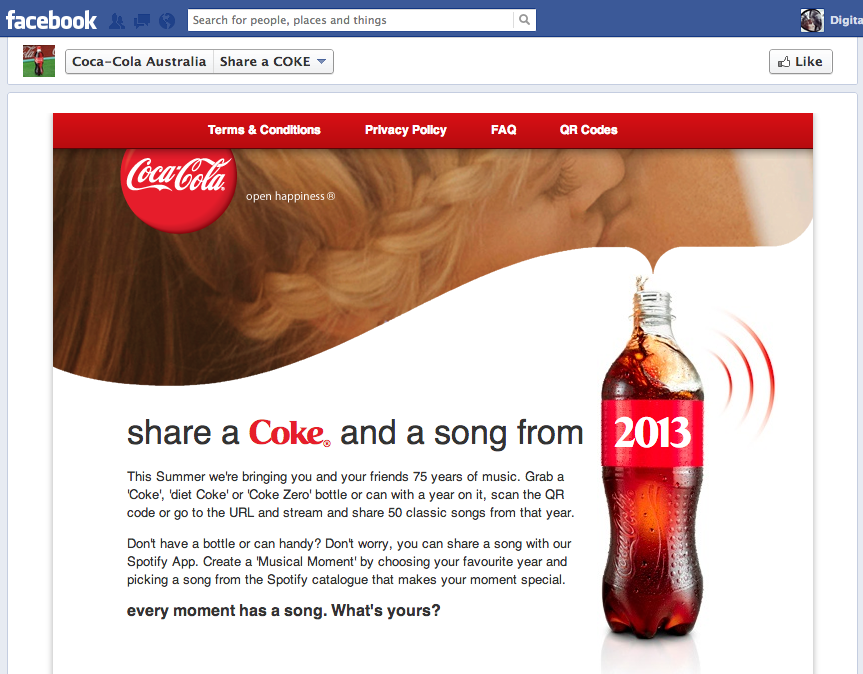
There’s got to be a better way to win over non-fans. Take my personal data for the prize draw and then give me time to get to know you before I get to like you. And if you insist I like you instantly, then give me something back instantly too. It’s called instant reward or instant gratification. Coca Cola did this brilliantly with their Share a Coke campaign – Just zoom in on the picture below:

share a coke

The Share a Coke Facebook page lets you share a song with your friends. Simply and with no catch. (And big thanks to my colleague & mate Kate for sharing this great example with us. Simply and with no catch also :)

Coca Cola Australia has close to 1 million likes (and 60M globally) vs 310,000 for Qantas (globally…) – what does that tell us? That Coca Cola unlike Qantas know a thing or two about social media and how to interact with their audience.

They are not desperately crying out for your Like for a start:

Screen Shot 2013-02-08 at 6.48.43 PM

Unlike Qantas:

Screen Shot 2013-02-08 at 6.49.38 PM

Further, you can unlike a page as fast as you like it (or after entering the said competition). And thank God (or Facebook) for that.

Lastly, I have just come across some telling stats from Pew Research Center’s latest survey that just reinforce how damaging the “like me please” approach is – with irrelevant content being the #3 reason for US Facebook users taking a break from the social network. No wonder – if I am forced to like most advertisers out there to be able to enter an online promo, then I will be taking a break soon too.

Telstra’s latest financial results fresh out of today’s news speak for themselves:

Its mobile business is thriving as it clocked 4 million new customers over the past 3 years, including an additional 607,000 customers and a revenue growth of 4.6% in the last 6 months alone – a healthy growth driven for most part by the sales of its 4G mobile devices and continued expansion of its 4G coverage.

What does that tell us?

Simply that more and more Australians are consuming mobile internet and data services.
That mobile is where the action is and where local advertisers should invest (those that aren’t already or not seriously enough.)

(Yes, I know I am starting to sound like a broken record. And here also.)

Where should I start? (I hear some of you ask)

Optimise your website for mobile for a start.
And if you have a new one on the way, make it responsive (more on this later!).
The same advice goes for email comms.

A lot of ink has been spilled in the press on Microsoft’s lost decade (and also on its unpopular leader’s antics). Nowadays, the once game changer is mainly known for loosing the race against innovation with its underwhelming product launches and poor attempts at copying others with inferior products. And so with this in mind, I was pleasantly surprised to read about the latest proof of concept from its research team: IllumiRoom – a technology that “augments the area surrounding the television screen with projected visualizations”. The pilot premiered at the CES last month and if it ever goes to market, it may well redefine not just the gaming experience but also home entertainment as a whole – I am no gamer but I could see myself watching Avatar in 3D IllumiRoom-style and loving it!

How successful the technology will be largely depends on which commercial uses Microsoft intend to make of it, its mass appeal and adoption potential by content creators amongst other hurdles. For now however, it is said to be the most advanced and user-friendly use of immersive imaging compared to earlier efforts reliant on similar techniques (e.g. see the over-the-top Peugeot Emotion & Motion show, or check out Sony’s DIY AR-room projection videos here).

Here is to hoping that something good comes out of Microsoft’s latest effort, that its concept sees the light of the day and gives the giant some of its past glory back…

Last night, when I get home, I switch my TV and Mac on, tune into my Blog, Facebook and Twitter pages, have a quick browse on the Mac before continuing reading an article on the launch of the new Coke Zero campaign on my iPad also nearby (in fact never far). As I read on, a comment catches my attention as I seem to remember reading something similar a few months ago. I then pick a book, leaf through it and find the point I was looking for: “It’s the Coke spirit that makes Diet Coke different. For this reason, it’s the Coke, not the “Diet” part of the Coke that should be promoted.” states advertising legend Jean-Marie Dru. I go back to my iPad, satisfied that it is consistent: the reinterpretation of the “Zero” part stays true to the spirit of Coke – I like it. A quick glance at my TV, iPad now at my feet, I then grab my Mac to my right and start typing… this post as it suddenly strikes me how BAD I have become at multi-screening when I am home – hopping from one device or screen to the next and back – and all the while, with my TV still buzzing in the background struggling for my attention. And so I decide to research this behaviour a bit more…

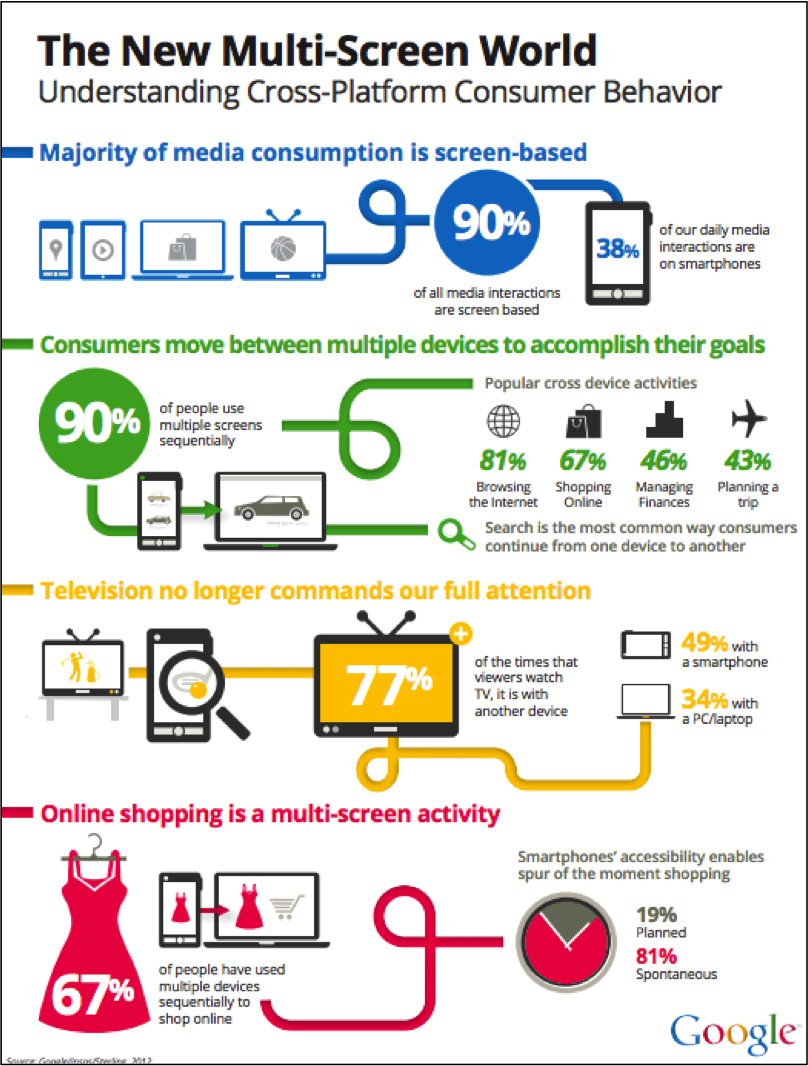
First, there are 2 ways of multi-screening Google tells us – sequential and simultaneous. I find that I fall into the simultaneous usage / multi-tasking / unrelated activity category.

usage%20of%20multi-screening-resized-600

I also discover that I belong to the 77% of viewers watching TV with another device in hand – one of the many stats Google give that show how mainstream multi-screening has become:

INFO

In other words, if you are a brand spending millions on a TVC with no or little presence on digital channels, you are not getting my full attention and your $$ are wasted on me. As multi screening makes more of us harder-to-catch, advertisers have to rethink their TV strategy and devise ways to continue (or start) the conversation on that second screen – be it a desktop, tablet or mobile (e.g. Commonwealth bank and ANZ advertising their mobile apps on TV is one way of doing this; chances are that punters will download their apps there and then). They must also give us the option to ”pick up where we left off” as we move from one device to the next (e.g. through offering the ability to save and retrieve a shopping list on all devices for example).

One final (pleasing) thought – slightly unrelated: as consumers, aren’t we lucky to have all these wonderful devices within reach and be able to search, interrogate, challenge the information that brands are feeding us in ways we couldn’t have dreamt before? Multi-screening makes us hard-to-catch but also more astute.

I was just reading about the latest developments about the Google Glass when I came across one of the many digital buzzwords: the Outernet a.k.a the OuterWeb. Defined as “the explosion of the internet into the real world.” by TrendOne. Or the art of overlaying information from the web on top of real-world objects. Or more simply: one way of describing the application of Augmented Reality in our everyday lives. To help you visualise, here is a brilliant-yet-creepy short-film by Israeli students Eran May-raz and Daniel Lazo on how AR at its most extreme could change our lives and human relationships forever:

This is an extrapolation of what Google Glass could become in the (distant) future i.e. just swap the glasses for the retina implants. Yet who is to say it can’t be done? The GG promo video is not that dissimilar after all…a little stretch of the imagination and we are there. Fascinating and creepy at the same time.

The forthcoming release of No, the movie, has just reminded me that advertising is not always just about generating sales. It’s comforting to see that along with social media it can also be used to fulfil a greater purpose – like freeing a country from its oppressors (ref. the true story No is based on), building a bridge between nations otherwise known as arch-enemies (ref. Palestine loves Israel and Israel loves Palestine Facebook pages) or alerting the world to the atrocities committed by a regime (ref. how Syrian dissidents spread the word via Facebook and YouTube). In fact, the Facebook and YouTube’s of this world have made it much easier for people to get a voice and force political changes through for the greater good. This is something we ought to celebrate and shout about. More.

I recently read about Nike’s decision to bring the day to day management of their social media in-house. With zillions of fans around the world and one of the biggest followings on social media no doubt, this didn’t surprise me.

Traditionally they have been reliant on agencies to do this for them; one of them I happened to work with did it brilliantly. At the time the agency had a full time blogger (former journalist and football enthusiast) on their staff, whose sole job was to blog and respond to Nike Football’s fans posts all day long. I remember thinking what a brilliant job his was! This one guy’s sole job was to blog all day long about what he loved the most and get paid for it. The other thought that crossed my mind then was how long before they insource the job?

What I see in favour of such a move…

Saving on costs – possibly. Gaining an in-depth understanding of your fans by being at the receiving end of their comments and having to deal with it all instantly – certainly. Getting your hands on and making sense of the precious social media data and any insights you can derive from it – absolutely.

All these are valid considerations. The fact remains that, in my view, brands still need an agency’s (brilliant) creative minds to come up with social media campaign ideas that strongly resonate with their fans. Ideas that create the social media buzz and aren’t afraid of shaking up the status quo that may prevail within the client organisation. Social media banter is after all nothing but conservative. Anything goes. An in-house community manager may not just cut it.

Other hurdles I can see…

Community managers are pretty tough hires to make. The blogger I mentioned was a writer by trade and football was his passion. Axe, one of Unilever’s most successful brands, outsources its social media to 2 PR specialists, who live & breathe the brand and carefully craft all their posts to sound like what a 16 yo might write – with millions of fans ‘watching’, the tone has to be right to be credible. The creative writing + the ‘knowing your brand and audience well’ make this job a hard one to fill. Having said this there is no stopping giant brands buying an entire social media agency (Hyundai-Innocean style) or hiring their agency social media staff back.

The logistics could be another pitfall for brands with a global presence. One thing the article on Nike mentioned was their intent to manage all communities from their Portland head office. For social media to be managed effectively you have to be able to respond within minutes of your fan’s comment. How can you do this effectively, and without fail, out of one location across multiple fan pages and timezones? By having someone watching the newsfeed 24/7??